Coconut, Nutrition & Long-Term Health: What the Evidence Really Says
Coconut is used around the world as fresh flesh, water, milk, cream, flour and oil. These foods come from the same fruit but have very different nutritional profiles. This detailed chapter explains what coconut contains, how it can fit into a balanced diet, what scientific evidence does and does not show, and how food supplements should be approached responsibly.
Coconut (Cocos nucifera) is unusual because several nutritionally distinct foods can be produced from one fruit. The white mature flesh contains substantial fat as well as dietary fibre. Young coconut contains liquid endosperm commonly known as coconut water. Pressing mature coconut flesh produces coconut milk, while extracting the lipid fraction produces coconut oil.
This distinction matters. A glass of coconut water, a portion of fresh coconut flesh and a tablespoon of coconut oil should not be treated as nutritionally equivalent simply because all three come from coconut.
Coconut can form part of an enjoyable and varied diet, but describing it as a miracle food, medicine, detox ingredient or cancer-prevention food would go beyond what current evidence supports and would also be inappropriate for EU food marketing.
1. What Exactly Is a Coconut?
Botanically, coconut is the fruit of the coconut palm Cocos nucifera. The edible portions include both the solid endosperm — usually called coconut meat — and the liquid endosperm, known as coconut water.
As the fruit matures, its composition changes. Young coconuts generally contain more water and softer flesh, while mature coconuts develop thicker meat with a much higher fat content.
Processing then creates several different foods from the mature kernel.
2. What Does Coconut Contain?
The nutrient composition varies according to variety, maturity, processing method and product type. Published reviews drawing on USDA data report that approximately 100 g of raw mature coconut flesh contains around 3.3 g protein, 33.5 g total fat and about 9 g dietary fibre.
Those figures immediately illustrate why coconut flesh should not be viewed in the same way as most fresh fruits. Mature coconut is considerably richer in fat and energy.
| Coconut product | Main nutritional characteristics | Practical dietary consideration |
|---|---|---|
| Fresh mature coconut meat | Fat, dietary fibre, carbohydrate, modest protein and various minerals. | Can be used as a food ingredient or topping. Portion size matters because of its energy density. |
| Coconut water | Mostly water, with naturally occurring sugars and minerals including potassium. | Different from coconut milk and coconut oil. Check packaged versions for added sugars. |
| Coconut milk | Water-and-fat emulsion made from coconut flesh. Fat content varies substantially between products. | Useful in cooking, but concentrated varieties can contribute considerable saturated fat and energy. |
| Coconut cream | More concentrated coconut preparation, generally containing more fat than coconut milk. | Best considered a rich culinary ingredient rather than an everyday beverage. |
| Coconut oil | Almost entirely fat and particularly rich in saturated fatty acids. | A concentrated cooking fat, not nutritionally equivalent to whole coconut. |
| Coconut flour | Produced from coconut solids after processing and can contain substantial dietary fibre. | Can be incorporated into recipes, although its baking properties differ from wheat flour. |
3. Coconut Meat: The Whole-Food Form
Coconut meat is the white flesh found inside a mature coconut. Compared with coconut oil, whole coconut meat retains components that are removed or greatly reduced during oil extraction, particularly dietary fibre and non-fat solids.
Published compositional data indicate that mature coconut flesh contains both fat and dietary fibre. It also provides small amounts of protein and various micronutrients.
Its culinary role is diverse. Fresh or dried coconut can be added to yoghurt, porridge, curries, rice dishes, salads, baked foods or fruit-based meals.
Whole coconut is not the same as coconut oil
This distinction is particularly important when reading online health information. Coconut oil is essentially a concentrated source of fat. Whole coconut meat contains the fat within a food matrix that also contains fibre, water and other components.
A tablespoon of oil therefore cannot be treated as the nutritional equivalent of a small portion of fresh coconut.
4. Coconut Water: Mostly Water, With Sugars and Minerals
Coconut water is the naturally occurring liquid found inside the fruit. Reviews of its composition show that it is predominantly water and also contains naturally occurring carbohydrates and minerals, including potassium.
The exact composition varies with coconut maturity, variety and processing. Commercial bottled coconut-water products may also differ from fresh coconut water.
What should you check when buying packaged coconut water?
- Check whether sugar has been added.
- Compare carbohydrate and sugar information per 100 ml.
- Check serving size rather than assuming one bottle equals one serving.
- Review ingredients for added flavours or other components.
- Remember that ordinary water remains a straightforward everyday beverage.
- Do not interpret mineral content as evidence that coconut water treats medical conditions.
5. Coconut Milk and Coconut Cream
Coconut milk is produced from processed mature coconut meat. It should not be confused with coconut water.
Coconut milk is an emulsion containing water and coconut fat. Depending on the manufacturing process, the finished product may range from relatively diluted cooking coconut milk to highly concentrated coconut cream.
This makes nutrition-label comparison particularly important. Two cans that appear similar in size may contain markedly different quantities of total fat and saturated fat.
A practical approach
Coconut milk can be useful for flavour and texture in soups, curries, sauces and desserts. It does not have to be completely excluded from a varied diet, but very rich versions should be considered in the context of the entire meal and the person’s overall saturated-fat intake.
6. Coconut Oil: Important Context About Saturated Fat
Coconut oil is frequently promoted online using broad wellness language. A more balanced nutritional description is that coconut oil is a concentrated dietary fat with a high proportion of saturated fatty acids.
The American Heart Association has reported that approximately 82% of the fatty acids in coconut oil are saturated. Its guidance recommends favouring sources of unsaturated fat, such as many non-tropical liquid vegetable oils, over foods high in saturated fat.
This does not mean that a person can never cook with coconut oil. It means coconut oil should not automatically be assumed to be a nutritionally superior everyday oil simply because it comes from a plant.
Highly concentrated fat and high in saturated fatty acids. Useful for particular flavours and culinary applications, but portion and overall dietary pattern matter.
Oils such as olive, rapeseed/canola, sunflower and other non-tropical liquid plant oils generally provide a greater proportion of unsaturated fatty acids.
7. Coconut Oil Is Not the Same Thing as Purified MCT Oil
One common source of confusion is the assumption that all research involving medium-chain triglycerides, or MCTs, automatically applies to ordinary coconut oil.
Purified MCT preparations used in studies can have a different fatty acid profile from conventional coconut oil. Coconut oil contains a large amount of lauric acid alongside other fatty acids and should not simply be described as equivalent to a laboratory or commercial purified MCT formulation.
This is an important example of why research on an isolated ingredient should not automatically be converted into a claim about an ordinary food.
8. How Can Coconut Fit Into a Balanced Diet?
Coconut can be enjoyed as one ingredient within a diverse diet. It does not need to carry a special therapeutic purpose.
The overall dietary pattern is much more important than whether a person consumes one particular “superfood”.
Practical examples
- Sprinkle a modest amount of unsweetened coconut over porridge containing oats, fruit and seeds.
- Use coconut milk for flavour in a vegetable and lentil curry rather than making coconut the main component of the meal.
- Combine fresh coconut with fruit and plain yoghurt or an appropriate fortified plant alternative.
- Use coconut flour as one ingredient in recipes rather than assuming it provides the same baking properties as cereal flour.
- Compare coconut-water products and select varieties without unnecessary added sugar.
- Rotate cooking fats instead of assuming coconut oil should replace all other oils.
9. Cancer Risk Reduction: What the Evidence Actually Supports
Cancer is not one disease and it does not have one dietary cause. A healthy lifestyle cannot guarantee that a person will never develop cancer.
However, reputable organisations including the International Agency for Research on Cancer and the World Cancer Research Fund identify several modifiable factors that can reduce population-level cancer risk.
These are broad lifestyle and public-health measures. They are not effects of coconut or dietary supplements.
10. Should People Take Supplements to Prevent Cancer?
Current World Cancer Research Fund guidance is clear: dietary supplements should not be used for cancer prevention. Nutritional needs should generally be met through a varied diet wherever possible.
This is especially important for a supplement company’s website. A vitamin, mineral, botanical, carotenoid, probiotic, gummy, capsule or softgel should not be positioned as a product for preventing cancer.
Evidence also illustrates why a “more is better” approach can be inappropriate. WCRF notes that high-dose beta-carotene supplementation can increase lung-cancer risk in people who smoke or previously smoked.
This does not mean all supplementation is unnecessary. Supplements can be appropriate in specific situations — for example, where a nutrient intake is insufficient, dietary patterns create particular requirements, or a healthcare professional identifies a need.
That is very different from recommending supplements as cancer-prevention products.
11. Where Diet Pharma Plus Products Can Fit — Without Disease Claims
Customers often ask which supplements they should take for “complete nutrition”. There is no universal supplement stack that every healthy adult requires.
The responsible approach is to identify whether a genuine nutritional gap or individual requirement exists and then select an appropriate product rather than automatically taking multiple supplements.
This type of product can be considered when vitamin D supplementation is appropriate for the individual. The exact dose, frequency and suitability should be based on the product label and personal circumstances.
B-vitamin supplementation can be relevant where intake of particular B vitamins is inadequate or where a specific dietary pattern creates a nutritional need.
Magnesium is an essential mineral that is also naturally available from foods such as nuts, seeds, pulses, wholegrains and some vegetables. Supplements may be considered when appropriate.
These capsules provide defined bacterial cultures and selected prebiotic fibres. They should be presented using factual ingredient and serving information.
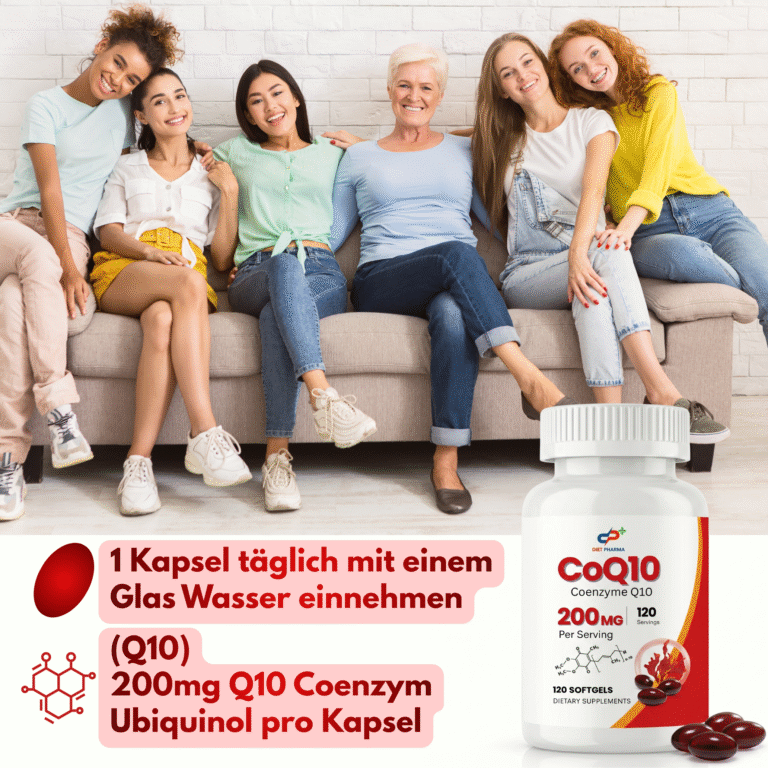
CoQ10 can be described factually by form, quantity, serving size and softgel format. It should not be treated as a nutrient required to make every person’s diet complete.
Astaxanthin, lutein, zeaxanthin and other ingredients can be described in terms of their identity, source and quantities stated on the approved product label.
These can be positioned as a convenient gummy-format food supplement with the ingredients and quantities accurately declared on the label.
Botanical products should be described conservatively using accurate identity, source, formulation, serving and quality information.
12. What Does a Nutritionally Balanced Dietary Pattern Look Like?
A useful way to think about diet is to focus on the overall pattern rather than individual foods or supplements.
International cancer-prevention guidance places particular emphasis on wholegrains, vegetables, fruits and beans/pulses. A complete diet also needs appropriate sources of protein and fats, while total energy intake should fit the individual’s requirements.
Where could coconut fit?
Coconut does not require its own special dietary category. It can simply be used as an ingredient.
Fresh coconut can be added in modest amounts to meals. Coconut milk may be used to flavour a vegetable or legume dish. Coconut water may be consumed as a beverage.
Coconut oil and cream are more concentrated sources of fat and are best considered in the context of the rest of the day’s saturated-fat intake.
13. An Example of a Food-First Day
The following example is not an individual meal prescription. It simply illustrates how coconut can appear in a varied dietary pattern without becoming the centre of every meal.
| Meal | Example | Where coconut fits |
|---|---|---|
| Breakfast | Oats with plain yoghurt or a fortified plant alternative, berries, nuts and seeds. | A small amount of unsweetened shredded coconut may be added for texture and flavour. |
| Lunch | Wholegrain bread or brown rice with vegetables, lentils/beans and an appropriate protein source. | Coconut is optional rather than essential. |
| Snack | Fruit, nuts, plain yoghurt or another minimally processed food according to individual needs. | Fresh coconut can occasionally form part of a snack. |
| Dinner | Vegetable and chickpea curry with wholegrain rice and a side of vegetables. | Coconut milk can contribute flavour and texture; the quantity can be adjusted to the overall meal. |
| Drinks | Water, unsweetened tea or other suitable unsweetened beverages. | Coconut water can occasionally provide variety; check packaged products for added sugar. |
14. What About Research Linking Coconut Compounds and Cancer Cells?
Scientific literature contains laboratory and animal studies investigating compounds found in coconut, coconut extracts and coconut-derived substances.
Such research is useful for generating scientific hypotheses. However, laboratory findings in cultured cells or animal models do not demonstrate that ordinary coconut consumption prevents, treats or cures cancer in humans.
There are several reasons for this distinction:
- Laboratory experiments may use concentrations that are not achievable through normal food intake.
- Isolated extracts are chemically different from eating the whole food.
- Biological effects observed in cells may not occur in humans.
- Animal models cannot automatically establish clinical outcomes.
- Prevention recommendations require evidence beyond a single mechanism or laboratory experiment.
- EU food marketing cannot convert preliminary research into a disease-prevention claim.
Therefore, it is appropriate for an educational article to say that coconut is scientifically studied. It is not appropriate for a food or supplement website to conclude from that research that coconut “fights”, “kills”, “protects against” or “prevents” cancer.
15. Why This Wording Matters for an EU Supplement Website
European food law places clear limits on disease-related statements in food information and advertising.
Article 7 of Regulation (EU) No 1169/2011 states that food information must not attribute to any food the property of preventing, treating or curing a human disease, nor refer to such properties.
Separately, Regulation (EC) No 1924/2006 governs nutrition and health claims made on foods. Health claims must be authorised and used under their applicable conditions.
Examples of wording to avoid
| Avoid | Why | Safer factual alternative |
|---|---|---|
| “Coconut prevents cancer.” | Disease-prevention claim. | “Coconut is a food containing fat, fibre and other naturally occurring components.” |
| “Astaxanthin protects against tumours.” | Disease-risk / treatment implication. | “The product contains astaxanthin from Haematococcus pluvialis.” |
| “CoQ10 prevents cancer.” | Disease-prevention claim. | “One recommended serving provides 200 mg ubiquinol CoQ10.” |
| “ACV gummies detox the body.” | Unsupported physiological claim. | Describe the ingredients, flavour, serving and format. |
| “Shilajit fights cancer cells.” | Medicinal/disease claim. | Describe the ingredient identity, origin and serving only. |
16. Frequently Asked Questions
Is coconut a healthy food?
Does coconut contain fibre?
Does coconut water contain minerals?
Is coconut water the same as coconut milk?
Is coconut oil the same as eating fresh coconut?
Is coconut oil mostly saturated fat?
Does coconut prevent cancer?
Which foods are recommended as part of cancer-risk-reduction guidance?
Should I take supplements to prevent cancer?
Which Diet Pharma Plus supplement should everyone take?
Can a supplement make my diet complete?
What if a blood test shows that I have a nutritional deficiency?
Can I take several Diet Pharma Plus products together?
17. Conclusion: Food Patterns Matter More Than “Miracle” Ingredients
Coconut is a versatile food with several distinct forms. Fresh coconut meat contains substantial fat together with dietary fibre and other nutrients. Coconut water is predominantly water with naturally occurring sugars and minerals. Coconut milk is a fat-containing culinary ingredient, while coconut oil is a highly concentrated fat with a large proportion of saturated fatty acids.
None of these facts make coconut a medicine, detox product or cancer-prevention treatment.
When the goal is long-term nutrition, the stronger approach is to focus on the dietary pattern as a whole: a broad variety of plant foods, wholegrains, vegetables, fruits and pulses, suitable protein foods, appropriate dietary fats and an energy intake that fits individual requirements.
The same evidence-based mindset should be applied to supplements. Diet Pharma Plus products can be used as food supplements where appropriate, but they should not be marketed as substitutes for a balanced diet or as products that prevent cancer or other diseases.
For cancer-risk reduction, the strongest recommendations focus on established lifestyle and public-health measures — including avoiding tobacco, maintaining an appropriate body weight, staying physically active, eating a predominantly plant-rich dietary pattern, limiting alcohol, protecting against excessive ultraviolet exposure, using relevant vaccination programmes and participating in appropriate organised screening.
Scientific & Regulatory References
- World Cancer Research Fund International. Cancer Prevention Recommendations and evidence relating to diet, body weight, physical activity and supplements.
- World Cancer Research Fund International. “Do not use supplements for cancer prevention” evidence review.
- International Agency for Research on Cancer / European Code Against Cancer. Evidence-based recommendations for reducing modifiable cancer risk.
- European Commission. Regulation (EU) No 1169/2011 — Article 7, Fair Information Practices.
- European Commission. Nutrition and Health Claims under Regulation (EC) No 1924/2006 and the EU Register of Health Claims.
- Balannara P. et al. Review of coconut products, extraction methods and nutritional composition. Journal of Food Science and Technology. The review reports USDA-derived composition data for coconut foods.
- American Heart Association. Dietary fats guidance and scientific advisory concerning saturated fat and coconut oil.
- Scientific literature reviewing coconut water composition, including water, carbohydrates and naturally occurring minerals.
Food supplements should not be used as a substitute for a varied and balanced diet and a healthy lifestyle. Do not exceed the recommended daily intake stated on the individual product label. Keep supplements out of the reach of young children.
People who take medication, have a diagnosed medical condition, are pregnant or breastfeeding, are undergoing cancer treatment, or have questions about an individual nutritional requirement should discuss food-supplement use with an appropriately qualified doctor, pharmacist or dietitian.