Ubiquinol vs Ubiquinone: Comparing the Two Main Forms of CoQ10
Both names appear on CoQ10 supplement labels, but what exactly is the difference? This detailed buyer’s guide explains the chemistry, formulation, absorption research, serving information and label details that matter when comparing ubiquinol and ubiquinone products.
Search for a Coenzyme Q10 supplement and you will quickly encounter two terms: ubiquinone and ubiquinol.
They are sometimes marketed as though they were completely different ingredients. They are not.
Ubiquinone and ubiquinol are two chemically related, interconvertible forms of Coenzyme Q10 (CoQ10). Ubiquinone is the oxidised form, while ubiquinol is the reduced form.
That distinction is real, but it does not mean that shoppers should automatically judge every product containing one form as superior to every product containing the other.
The finished formulation matters too: the amount per recommended serving, the carrier ingredients, whether the product is a softgel or another format, how the CoQ10 has been formulated and the instructions provided by the manufacturer can all be relevant when two products are compared.
Ubiquinone is the oxidised form of CoQ10, while ubiquinol is its reduced form. The two forms participate in a reversible redox system and can be converted between forms in biological systems. Some small human studies have reported greater plasma CoQ10 exposure with certain ubiquinol formulations, while other research demonstrates that the performance of a finished CoQ10 product also depends strongly on formulation. A label therefore needs to be assessed as a complete product, not simply by the word “ubiquinol” or “ubiquinone”.
1. What Is Coenzyme Q10?
Coenzyme Q10 is a naturally occurring compound found within the human body and in other living organisms.
The abbreviation CoQ10 refers to Coenzyme Q10. The molecule belongs to a group of substances known as ubiquinones.
From a consumer’s perspective, the key point is that CoQ10 does not exist as only one fixed chemical state.
Two forms commonly discussed in food supplements are:
- Ubiquinone — the oxidised form
- Ubiquinol — the reduced form
These forms participate in a reversible oxidation-reduction, or redox, relationship.
This is why calling ubiquinol and ubiquinone completely unrelated ingredients would be misleading.
2. What Is Ubiquinone?
Ubiquinone is the oxidised form of Coenzyme Q10.
It has been widely used in food supplements for many years and can be formulated in tablets, capsules, softgels and other delivery systems.
The term “oxidised” is a chemical description. It should not be interpreted by consumers as meaning “damaged”, “inferior” or “unhealthy”.
Oxidation and reduction are normal chemical processes and ubiquinone forms part of the normal CoQ10 redox cycle.
3. What Is Ubiquinol?
Ubiquinol is the reduced form of Coenzyme Q10.
The chemical difference between ubiquinol and ubiquinone involves their redox state. In biological systems, these forms are not isolated from one another permanently.
Modern supplement formulations can provide CoQ10 directly in the ubiquinol form.
When a label states “Ubiquinol CoQ10”, consumers should still check the amount supplied per recommended serving and the rest of the finished formulation.
4. Ubiquinone and Ubiquinol Are Part of a Redox Cycle
One of the most important concepts for understanding CoQ10 is that ubiquinone and ubiquinol can be interconverted.
One chemical redox state of Coenzyme Q10.
The reduced chemical redox state of Coenzyme Q10.
Research examining CoQ10 metabolism shows that the two forms participate in a continual redox cycle.
Studies have also reported that circulating CoQ10 is found predominantly in the reduced ubiquinol form, including after ingestion of some ubiquinone formulations.
5. Ubiquinol vs Ubiquinone: Side-by-Side Comparison
| Feature | Ubiquinol | Ubiquinone |
|---|---|---|
| Chemical form | Reduced form of CoQ10 | Oxidised form of CoQ10 |
| Relationship | Both are interconvertible forms within the CoQ10 redox system. | |
| Used in supplements? | Yes | Yes |
| Available as softgels? | Yes | Yes |
| Does the name alone tell you the full formulation? | No | No |
| Should amount per serving be checked? | Yes | Yes |
| Can formulation affect measured bioavailability? | Yes. Published comparisons indicate that the finished formulation can materially influence CoQ10 exposure. | |
| Can one form universally be declared superior based only on its name? | No. The specific formulation, study conditions and measured outcome need to be considered. | |
6. Is Ubiquinol Better Absorbed Than Ubiquinone?
This is one of the most common questions buyers ask — and the answer is more nuanced than many product advertisements suggest.
Some relatively small human studies have reported higher plasma CoQ10 concentrations after supplementation with particular ubiquinol formulations compared with particular ubiquinone formulations.
For example, crossover research in healthy volunteers has demonstrated higher measured plasma exposure with certain ubiquinol products under the conditions tested.
However, this does not establish that every ubiquinol product is always better absorbed than every ubiquinone product.
Other research comparing different finished formulations has demonstrated that formulation technology can significantly alter CoQ10 bioavailability.
A published review of CoQ10 absorption highlighted variables such as crystal dispersion and carrier composition as important considerations. In some comparisons, a well-formulated ubiquinone preparation achieved greater exposure than another tested ubiquinol preparation.
A study in older adults similarly showed that one specially formulated ubiquinone preparation produced strong bioavailability, illustrating why the ingredient name by itself does not tell the entire story.
7. Why the Finished CoQ10 Formulation Matters
Imagine comparing two cars using only the type of fuel they use. You would be ignoring the engine, transmission, weight and many other variables.
A similar principle applies when comparing CoQ10 supplements.
“Ubiquinol” or “ubiquinone” is one important piece of information, but it is not the complete product specification.
Check whether the ingredient is declared as ubiquinol, ubiquinone or another clearly identified preparation.
Compare the labelled quantity in the full recommended daily serving, not only the number printed most prominently on the front.
Check whether the product is supplied as an oil-based softgel, capsule, tablet or another formulation.
Review oils, emulsifiers and other excipients listed in the complete ingredient declaration.
The shell composition can matter for consumers with vegetarian, vegan or other dietary preferences.
Always read the recommended intake, storage instructions and other information provided on the final label.
8. Why Are Many CoQ10 Products Sold as Softgels?
CoQ10 is a lipid-soluble compound.
For this reason, many commercial CoQ10 products are formulated in softgels containing an oil-based filling.
From the buyer’s perspective, this makes the complete ingredient list particularly useful.
Rather than focusing only on the front label, examine:
- The declared CoQ10 form
- The amount per recommended serving
- Carrier oil or oils
- Additional formulation ingredients
- Softgel shell composition
- Serving instructions
- Storage conditions
- Total number of servings in the pack
A softgel format also provides a practical pre-portioned presentation: there is no powder to weigh and no liquid to measure separately.
That is a format description — not a claim that every softgel formulation has identical absorption.
9. Is Ubiquinol the “Active Form” of CoQ10?
The phrase “active form” appears frequently in online supplement marketing.
It can oversimplify the chemistry.
Ubiquinol is indeed the reduced form of CoQ10, but the normal biological CoQ10 system involves conversion between ubiquinol and ubiquinone.
Describing ubiquinol accurately as the reduced form is clearer than using the phrase “active form” as though ubiquinone were biologically irrelevant.
This ignores the reversible CoQ10 redox system and is not a useful way to explain the relationship between the forms.
This describes the chemical distinction without creating an unsupported superiority claim.
10. Does Age Automatically Mean You Need Ubiquinol?
Another common marketing statement suggests that everyone above a particular age should automatically choose ubiquinol.
Small studies in older adults have compared the pharmacokinetics of different CoQ10 forms and formulations, and some have reported higher plasma exposure with particular ubiquinol products.
However, an age threshold alone does not tell a consumer which finished supplement is appropriate.
Product formulation, labelled serving, individual circumstances, medicines, diet and the reason a person is considering supplementation may all be relevant.
Questions involving an individual medical situation are better discussed with a doctor or pharmacist rather than decided from a generic age-based marketing statement.
11. How to Read a CoQ10 Supplement Label Before Buying
A good product comparison starts with the label.
Do not compare products using only their front-of-pack marketing language.
- Identify whether the product states ubiquinol or ubiquinone.
- Find the recommended daily serving.
- Check the CoQ10 amount supplied by that full serving.
- Calculate how many labelled servings the pack contains.
- Read the complete ingredients rather than only the active ingredient.
- Check the carrier oil and other formulation ingredients.
- Review capsule-shell composition if dietary suitability matters.
- Read all warnings and intended-user information.
- Check storage conditions.
- Compare the product price using the same unit of comparison.
12. CoQ10 per Capsule vs CoQ10 per Daily Serving
This distinction is simple but extremely important.
Suppose two hypothetical products are labelled as follows:
| Example | CoQ10 per unit | Recommended units | CoQ10 per labelled serving |
|---|---|---|---|
| Product A | 100 mg | 2 capsules | 200 mg |
| Product B | 200 mg | 1 softgel | 200 mg |
Looking only at “100 mg” versus “200 mg” could make these products appear very different.
Looking at the complete labelled serving shows that both hypothetical examples provide the same amount per serving.
That does not make the products identical — the forms, formulations, excipients and pack sizes could still differ — but it produces a more meaningful starting comparison.
13. Compare Cost per Labelled Serving — Not Just Bottle Price
The cheapest bottle is not necessarily the lowest-cost product per labelled serving.
Use this simple calculation:
The result gives the cost per labelled serving. This is a more consistent way to compare pack value when serving sizes differ.
Cost should still not be the only decision factor.
A fair comparison should consider the CoQ10 form, serving amount, complete formulation, number of servings, storage instructions and the information available from the brand.
14. Be Careful With the Phrase “High Bioavailability”
Bioavailability is a scientific concept describing how much of an administered substance becomes available systemically under the conditions measured.
In supplement marketing, however, expressions such as “high bioavailability”, “maximum absorption” and “superior absorption” are sometimes used much more broadly.
A pharmacokinetic study on one specific formulation does not automatically prove the same result for every finished product containing the same ingredient.
When evaluating an absorption statement, useful questions include:
- Was the exact finished product studied?
- Was only the ingredient studied?
- What formulation was used?
- What comparator was used?
- How many participants were included?
- Was the study acute or long-term?
- Was plasma exposure measured, or was a clinical outcome measured?
- Can the findings reasonably be applied to the product being sold?
15. What About Claims for Energy, Heart Health or Anti-Ageing?
CoQ10 is frequently discussed online in connection with many health topics.
A commercial food-supplement website in the European Union cannot simply turn those discussions into product benefits.
EU rules require nutrition and health claims used in food marketing to comply with the applicable legal framework. The European Commission maintains an EU Register containing authorised and non-authorised health claims.
For that reason, this buyer’s guide focuses on factual information:
- What ubiquinol is
- What ubiquinone is
- How the forms are related
- What published formulation studies have measured
- How to read a product label
- How to compare labelled servings
It does not present CoQ10 as a treatment for disease or promise cardiovascular, energy, cognitive, anti-ageing or other medical effects.
16. So Which Is Better: Ubiquinol or Ubiquinone?
A useful buyer’s answer is: the form is important, but the form is not the whole product.
Some human pharmacokinetic studies have found higher plasma CoQ10 exposure with certain ubiquinol formulations.
Other comparisons demonstrate that formulation characteristics can substantially influence measured bioavailability and that a carefully formulated ubiquinone product may perform differently from another ubiquinone product — or from a particular ubiquinol formulation.
Therefore, shoppers should resist simple statements such as:
This ignores differences between finished formulations and the limitations of individual studies.
This gives the buyer information that can actually be checked on the product and against available evidence.
A practical seven-step comparison
- Identify the CoQ10 form.
- Compare amount per labelled serving.
- Compare the finished dosage format.
- Read carrier oils and excipients.
- Calculate the number of servings.
- Calculate cost per serving.
- Look for evidence that applies to the actual formulation, not just broad marketing language.
17. Where Diet Pharma Plus Ubiquinol CoQ10 Fits Into This Comparison
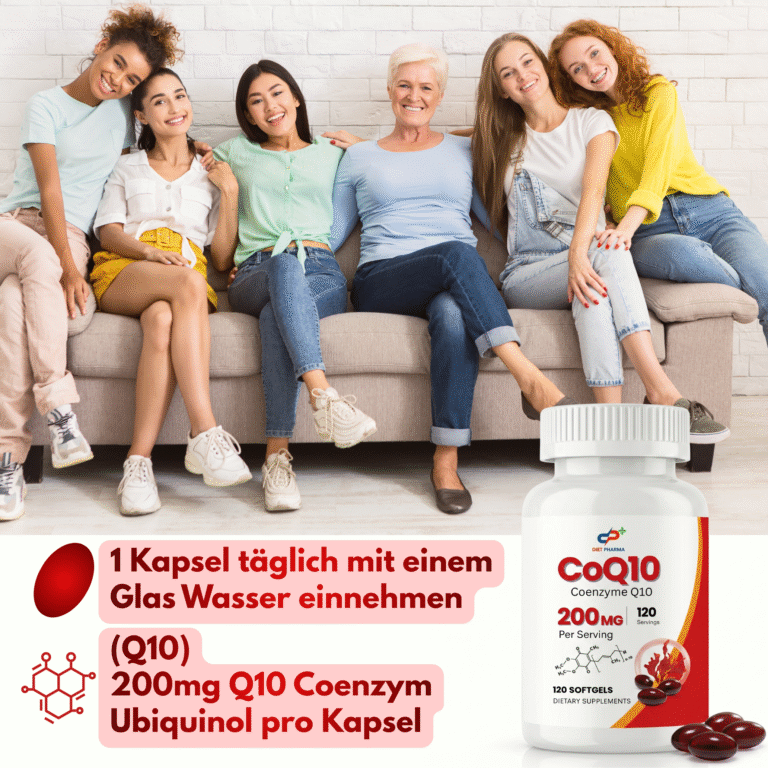
Diet Pharma Plus offers a CoQ10 product using ubiquinol as the declared CoQ10 form.
Rather than choosing it simply because the word “ubiquinol” appears on the label, buyers should apply the same checklist described throughout this guide:
- Confirm the current CoQ10 amount per recommended serving.
- Check the recommended number of softgels.
- Read the complete ingredient declaration.
- Review the oil-based formulation and excipients.
- Check the current pack size and number of servings.
- Follow the usage and storage information on the physical label.
Explore Ubiquinol CoQ10
Review the current product information, available pack options and complete label details before making a purchase.
18. When Should You Ask a Doctor or Pharmacist Before Using CoQ10?
A general buying guide cannot determine whether a food supplement is suitable for a particular person.
Professional advice is especially sensible when a person:
- Uses prescription medicines
- Has an existing medical condition
- Is pregnant or breastfeeding
- Is planning a medical procedure
- Uses several supplements simultaneously
- Has questions about an individual dose or medical purpose
A pharmacist or doctor can assess the individual situation, including medicines and other supplements being used.
19. Frequently Asked Questions
What is the main difference between ubiquinol and ubiquinone?
Is ubiquinol the same as CoQ10?
Is ubiquinone a synthetic or inactive version of CoQ10?
Is ubiquinol always better absorbed?
Why is formulation important?
Why is CoQ10 often sold in softgels?
Should I compare CoQ10 per capsule or per serving?
Does a higher milligram number automatically mean a better product?
Is “200 mg” always one capsule?
Is ubiquinol automatically better for people over 50?
Can CoQ10 be used together with medicines?
Which form does Diet Pharma Plus use?
20. Conclusion: Compare the Product, Not Just One Word on the Label
The difference between ubiquinol and ubiquinone is straightforward at the chemical level:
Ubiquinone is the oxidised form of CoQ10, and ubiquinol is the reduced form.
The buying decision is less simple.
Research has shown that some ubiquinol formulations can produce higher plasma CoQ10 exposure than some ubiquinone formulations. At the same time, other research makes an equally important point: the finished formulation matters.
Carrier ingredients, formulation technology, dosage format and individual variability can all influence measured results.
That is why a careful shopper should compare:
CoQ10 form + amount per labelled serving + finished formulation + excipients + number of servings + cost per serving + manufacturer information.
This provides a much more transparent basis for comparing products than relying on a single marketing phrase such as “active form”, “maximum absorption” or “best CoQ10”.
Research & Regulatory References
- Mantle D, Dybring A. Bioavailability of Coenzyme Q10: An Overview of the Absorption Process and Subsequent Metabolism. Antioxidants. 2020. Review discussing CoQ10 absorption, redox conversion and the importance of finished formulation.
- Langsjoen PH, Langsjoen AM. Comparison study of plasma coenzyme Q10 levels in healthy subjects supplemented with ubiquinol versus ubiquinone. Clinical Pharmacology in Drug Development. Human crossover comparison of the two forms.
- Zaki NM et al. Comparative Bioavailability of Different Coenzyme Q10 Formulations in Healthy Elderly Individuals. Human formulation comparison examining plasma CoQ10 exposure.
- Hosoe K et al. Study on safety and bioavailability of ubiquinol after single and multiple oral administration to healthy volunteers. Regulatory Toxicology and Pharmacology.
- National Center for Complementary and Integrative Health. Coenzyme Q10. General evidence overview and consumer safety information.
- European Commission. Nutrition and Health Claims. Information concerning Regulation (EC) No 1924/2006 and the use of nutrition and health claims in food marketing.
- European Commission. EU Register of Nutrition and Health Claims. Reference database for authorised and non-authorised health claims.
Food supplements should not be used as a substitute for a varied and balanced diet and a healthy lifestyle. Do not exceed the recommended daily intake stated on the product label. Keep food supplements out of the reach of young children.
Product formulations can change. Always check the current physical label for the authoritative ingredient list, recommended intake, warnings, storage instructions and other mandatory information.
People taking medication, living with a medical condition, preparing for surgery, pregnant or breastfeeding, or uncertain about individual supplement use should seek advice from an appropriately qualified doctor or pharmacist.
Practical information about supplements, vitamins, gummies, capsules, softgels, ingredients, product labels and everyday supplement routines.